Site direction and existing structures narrow the first-phase scope to utility activation and two bookable silo suites.
Business Model
A focused Phase 1 model for two silo suites.
Phase 1 raises $95,000 to convert two existing steel grain silos into two bookable guest suites, with major spend gated behind land-use, OSSF, floodplain/CoC, permit, inspection, and launch-readiness controls.
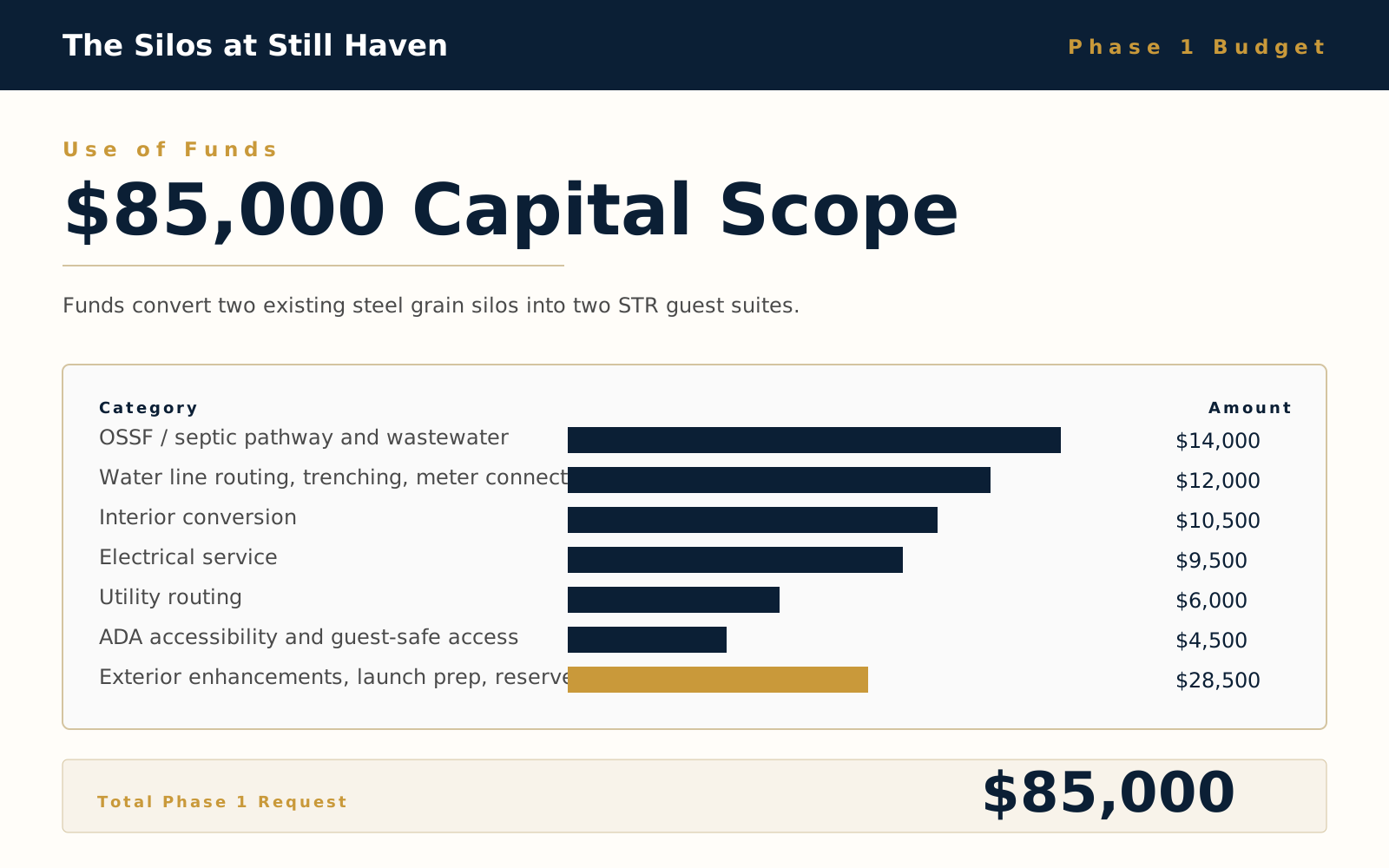
Current capital is restricted to utilities, structural preparation, interior completion, and operating readiness for two silo suites.
This is a contingent long-range target, not the basis for the current Phase 1 underwriting case.
Future development is dependent on operating data, reserve coverage, and repeated demand, not concept projections.
Investor snapshot
The Phase 1 model in six views.
Capital scope, timing, NOI scenarios, budget line items, permit gates, and packet-request language from the final booklet.
Operating proposition
What is the Phase 1 business case?
Two silo suites first. Real booking proof before any later buildout.
- Uses an existing land-and-silo base instead of underwriting a full ground-up hospitality launch
- Tests two differentiated short-stay suites before any later expansion commitment
- Directs capital to enabling infrastructure, safe completion, and launch readiness instead of early overbuild
- Keeps future development dependent on measured performance rather than headline projections
- Keeps the public underwriting case consistent across every review path inside the Phase 1 scope
Target markets
Which guest segments support the two Phase 1 silo suites?
The two Phase 1 silo suites are aimed at guests who value privacy, design, and a strong sense of place.
Primary segment
Veterans seeking respite
Still Haven's origin story and quiet setting create strong narrative fit for veterans looking for restorative, non-clinical space.
Premium leisure
Wellness travelers
Guests already paying for boutique cabins, glamping, and nature escapes are a logical fit for the design-forward silo experience.
Small groups
Corporate retreats
Leadership off-sites, founder resets, and small team retreats create demand for buyouts, workshops, and weekday occupancy smoothing.
Geographic reach
Regional demand base
Central Texas provides a nearby guest pool while still allowing the property to market quiet and distance.
Customer acquisition
How is the two Phase 1 silo suites expected to find guests?
The Phase 1 case assumes practical Central Texas hospitality channels, not a large brand-marketing budget.
Short-stay platforms
Marketplace distribution can provide the first booking base while the direct audience is still developing.
Direct site + search
Still Haven pages targeting Central Texas searches support direct discovery over time.
Referral partners
Veteran networks, local wellness referrals, and mission-aligned community introductions can support qualified stays after launch.
Repeat demand
Acquisition efficiency improves only after the two Phase 1 silo suites demonstrates guest satisfaction, reliable turnovers, and rate discipline.
Capital structure
Capital request and Phase 1 proof
Phase 1 capital is intentionally narrow: two operating silo suites, enabling infrastructure, and one real booking cycle.
Source mix
Phase 1 keeps the same operating scope regardless of the capital path or instrument used to close the gap.
Current ask
$95,000 is tied to two silo suites, one site, and one operating proof cycle.
Long-range target
$250,000 remains contingent and is not current-phase underwriting.
Public terms boundary
Public pages summarize the project and diligence path. Legal and return terms are not posted publicly.
Future revenue layers
Later additions such as guided sessions or small retreats are optional and do not drive the initial case.
Expansion discipline
Phase 2 only becomes reviewable after performance gates are met, documented, and repeated.
Use of funds
How does the $95,000 Phase 1 ask allocate?
Each dollar ties back to one outcome: opening two lawful, bookable silo suites and observing a real operating cycle.
Phase 1 excludes
- Phase 2 expansion before proof
- Broad retreat programming before operations stabilize
- Public return terms before private written review
Operating assumptions
What does the conservative planning range look like?
These cases reconcile ADR, occupancy, room revenue, operating expense, and reserve logic directly.
Cost structure + position
What supports the unit-level case in Central Texas?
The two Phase 1 silo suites are underwritten like a small hospitality asset with room-revenue-only assumptions and a clear reserve posture.
Fixed / committed costs
Utilities, insurance, core site upkeep, compliance-related upkeep, and baseline operating readiness continue whether occupancy is high or low.
Variable costs
Cleaning, consumables, payment and platform fees, guest supplies, and maintenance move with actual stay volume.
Expected net operating posture
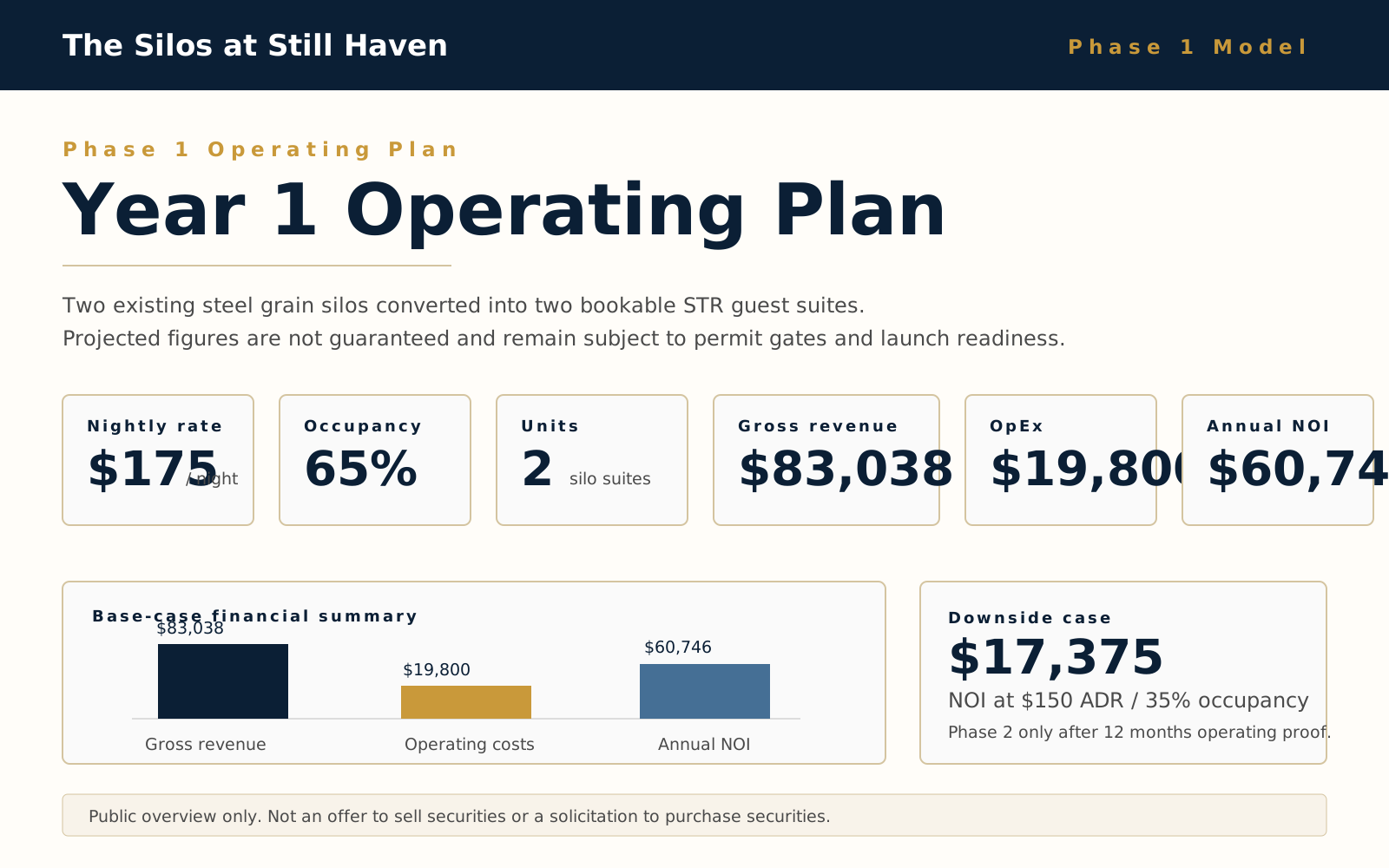
Base-case gross revenue of $83,038 less annual OpEx of $19,800 and a 3% platform fee produces projected annual NOI of $60,746. Booklet downside NOI is $17,375.
Competitive positioning
Still Haven is differentiated by adaptive silo reuse, veteran-owned mission fit, and a Central Texas setting without relying on luxury-resort pricing logic.
Risk / dependency map
Utilities, permit path, contractor sequencing, launch readiness, and repeated guest demand remain the main dependencies before expansion is even reviewable.
Later expansion rule
Phase 2 is not part of this capital raise. Later expansion requires permit and compliance gates, executed land-use terms, ground-level silo photo proof, 55%-60% trailing six-month occupancy, base-case NOI within 15% of model, and current Phase 1 reserves.
Milestone gates
What has to happen before later expansion is reviewable?
Later expansion is gated by proof, not by concept drawings or headline demand assumptions.
base case discipline and next step
Phase 1 remains viable only if the project stays disciplined under the base case discipline.
The final booklet uses 9.7 combined nights/month at base OpEx as a public operating reference. Downside NOI remains projected positive at $17,375, but all figures remain projections and are not guaranteed.